



When your digital workspace becomes cluttered with redundant tags, inconsistent structures, and scattered information, it's time for a thoughtful cleanup. This guide will walk you through the process, step by step, of transforming chaos into clarity while preserving your valuable data.
Create a Complete Inventory of Your System
List Every Component of Your Workspace
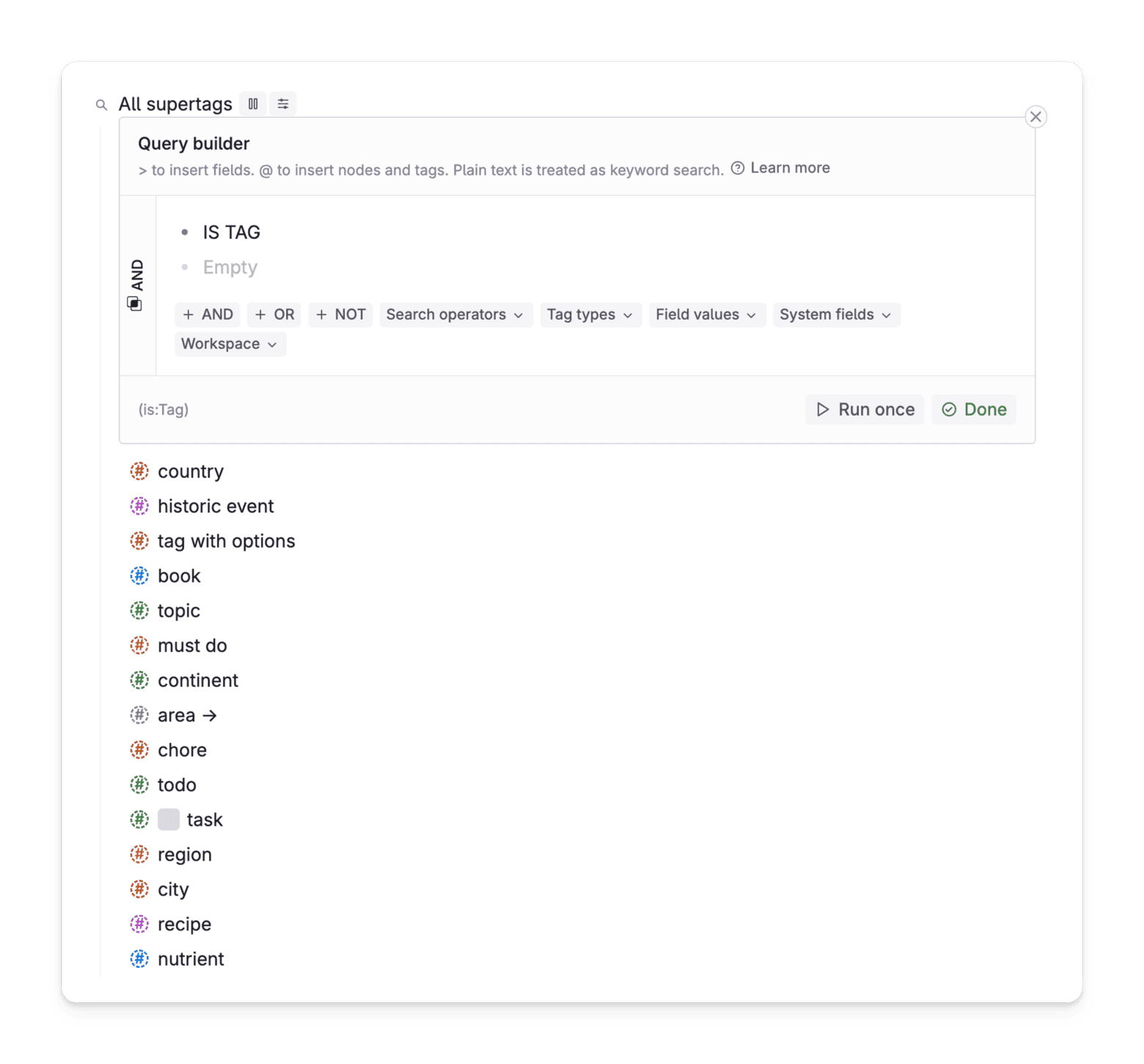
Before diving into cleanup, take time to understand your current state. Create a place where you list out all your supertags, fields, and how they're currently being used. Don't worry about organizing them yet -- this is just an inventory.
- Use this search query to find all supertags:
IS TAG - Use this search query to find all fields:
IS FIELD - Tip: Use workspace nodes to limit your search to only a specific workspace.
Identify Patterns of Redundancy
Pay special attention to areas where you have multiple tags serving similar purposes or fields that appear in multiple places with slight variations.
- having both a task and todo supertag
Design Your Ideal Structure
Group Similar Items Together
With your inventory in hand, start grouping similar items together. Think of this like sorting through a messy closet -- first, you group similar items, then decide which ones to keep.
Map Out Your Core Categories
Look for natural hierarchies in your data. For instance, you might notice that "book notes," "podcast notes," and "article highlights" could all fall under a parent category of "content notes."
Establish Your Foundation
The key is to identify your core categories -- the fundamental building blocks of your system. These will become your "proto-tags" that other, more specific tags can inherit from.
Execute the Cleanup
Merge Duplicate Fields First
Start with the easiest wins: merging duplicate fields. If you have multiple date fields or status fields serving the same purpose, consolidate these first. This creates immediate clarity without risking data loss.
Consolidate Similar Tags
Next, tackle your tags. Begin with obvious duplicates or near-duplicates, merging them carefully. When merging, ensure that both tags have similar field structures before combining them.
Document Your New Structure
As you work through this process, document your decisions. Create a simple schema page that shows how your tags relate to each other and what fields they should contain. This becomes your reference point for future organization.
Resolve Complex Situations
Ask Key Questions for Each Decision
Some cleanup decisions aren't straightforward. For complex cases, ask yourself:
- What's the primary purpose of this tag?
- How does it fit into my typical workflows?
- Could this be handled by a combination of other tags?
- Would merging this create more problems than it solves?
Maintain Useful Distinctions
Sometimes, the best decision is to keep things separate but document why they're different.
Maintain Your Clean Workspace
Set Clear Guidelines
Once you've cleaned up your existing structure, prevent future clutter by establishing some basic rules:
- New tags should either extend from existing proto-tags or have a clear, documented reason for being independent
- Keep a "stray tag" search that helps you identify when new, uncategorized tags are created
Review Regularly
Regularly review your schema page to ensure it reflects your current system.
Remember, the goal isn't perfection -- it's clarity and usability. Your system should help you work more effectively, not create additional overhead. Start with the most impactful changes and iterate as needed.
Your workspace will continue to evolve, but with these foundations in place, future changes will be intentional rather than chaotic. The key is to maintain enough structure to stay organized while remaining flexible enough to adapt to your changing needs.