
Knowledge graph. Write information, not documents.
Tana Outliner is a knowledge graph. Just like a map shows how cities and towns are connected by roads, a knowledge graph shows how concepts and entities are connected. This way of connecting information aligns more closely with how the human brain works than traditional databases — giving you and your AI capabilities that are impossible to achieve with other tools.
What is Tana Outliner's knowledge graph?
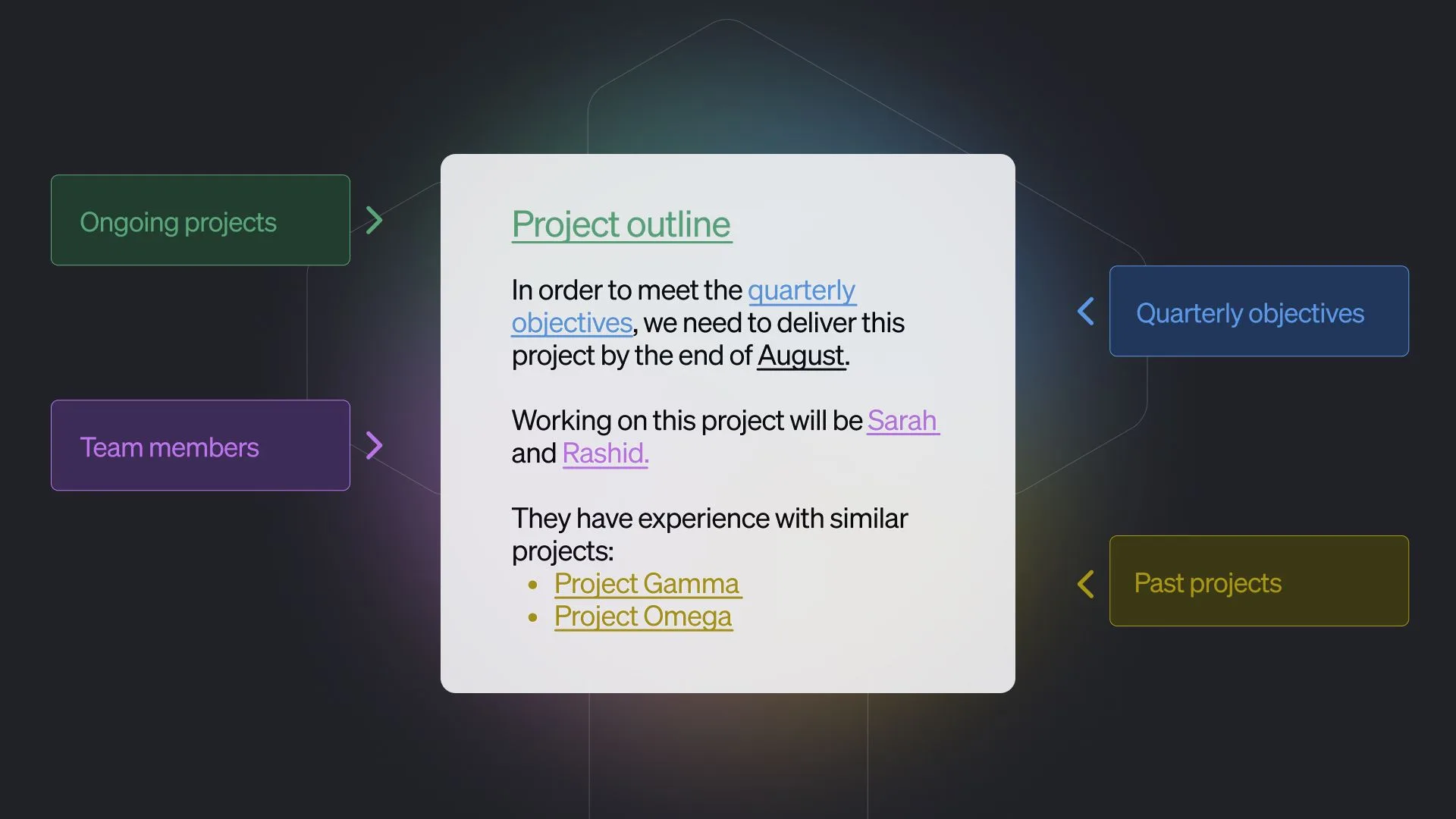
A knowledge graph is a web of things and how they connect: people, ideas, projects, decisions are all linked together instead of locked in separate files.
In Tana Outliner, every note, task, and entity you create becomes part of this graph. You write in a simple outline (fast, familiar, no friction), and the knowledge graph quietly keeps all the connections underneath, ready for you and your AI to actually use.
“Tana Outliner is one of the few knowledge management tools that moves beyond mimicking static text on paper. It takes the computational medium seriously. It gives regular folks access to a set of powerful primitives that previously only developers could touch.”

“This is proposing a new fundamental model for computing, a new mental model.”

Old habits die hard, but the document has to go.
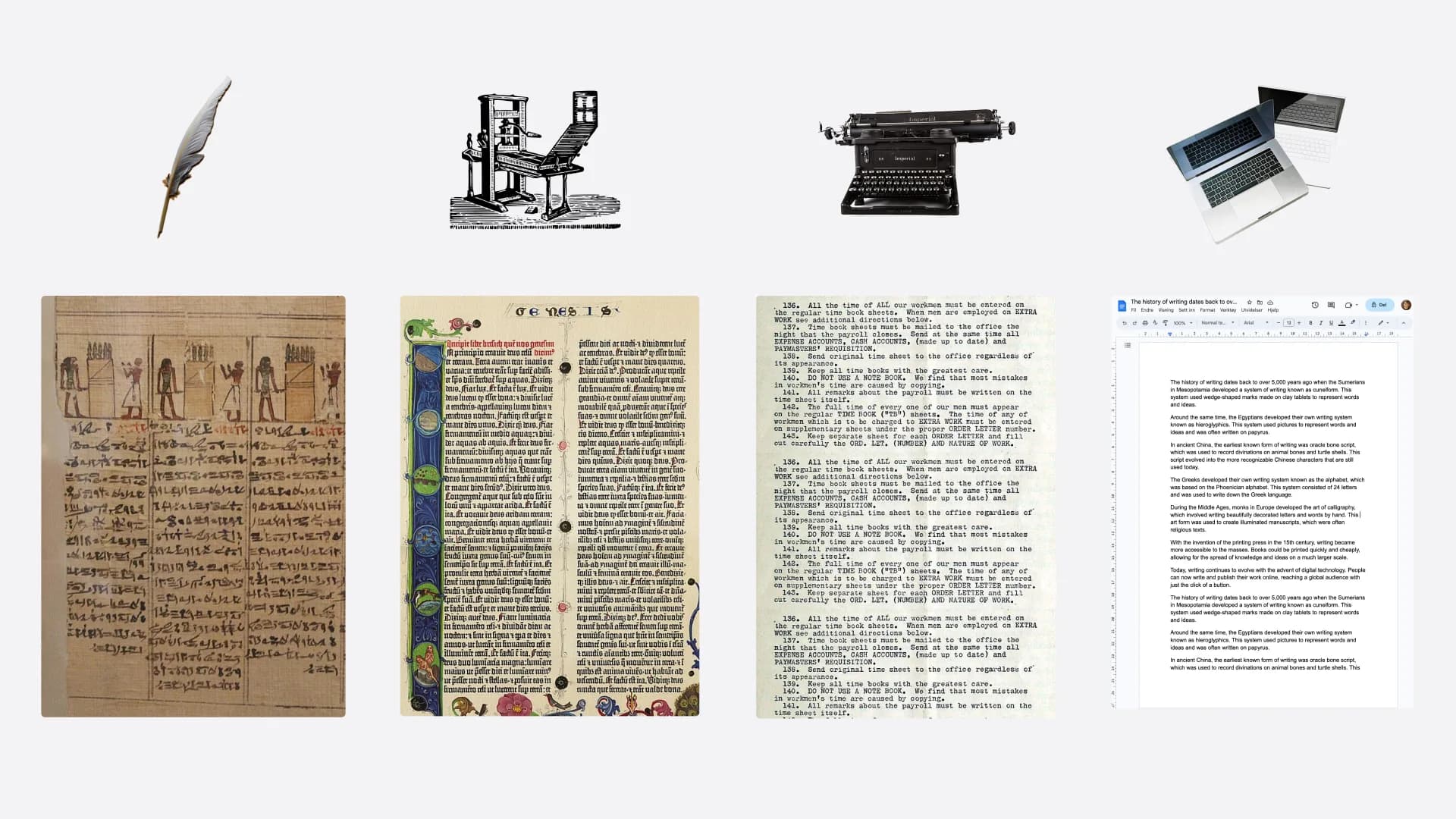
The document format has survived from scrolls, via the printing press and typewriter, to various incarnations of live web docs — all without fundamentally changing much. The reason is simple: documents are straightforward, familiar, and just what we have always done.
Documents are painfully limiting, and invariably lead to scattered and outdated information, time wasted copying and pasting across different tools. They also do not lend themselves well to leveraging the power of AI, because of their lack of proper structure.
Why is it that we have to choose between the familiar flexibility of a plain document, and the awkward rigidity of structured tools? We believe we have found a sweet spot.
Knowledge graph + outline editor = ❤️
An outline editor is the perfect interface for working with a knowledge graph because it allows for efficient navigation and organization of complex information. However, it has lacked a way to represent structure in your information beyond a simple hierarchy.
Tana Outliner has brought two important innovations to the outline editor that solve this: supertags and their fields let you capture structured information, and views let you visualise information within the outline editor.
“Tana Outliner's design reflects deep knowledge of the strengths and weaknesses of existing connected outliner tools.”

“Tana Outliner operates in the sweet spot of outliners and databases, creating a new kind of flexibility that sometimes resembles magic.”

Knowledge graphs are superior for AI.
As we are entering the AI era, a lot of things will change. The single-purpose software that we have been used to, with rigid interfaces and traditional databases, will struggle to leverage the new possibilities.
Knowledge graphs are better suited for AI than traditional databases because they provide a more versatile and expressive way to represent and connect data.
Graph-based data models allow for more complex relationships between your information, which in turn helps AI systems to better understand and reason about it. They can be updated and expanded with ease, making them perfect for ever-changing information and needs.
“Tana Outliner is to the knowledge graph, what Netscape was to the Internet.”

What you can build on Tana Outliner's knowledge graph
Because everything lives in one connected graph, you can build lots of different “apps” on top of the same information.
The nice part? You do not have to decide up front whether something is a “note” or a “task” or a “record.” It is just a node in your graph. You can look at it however you need to, whether the use case is reading and research, thinking and writing, tasks and projects, life OS, or something else.